
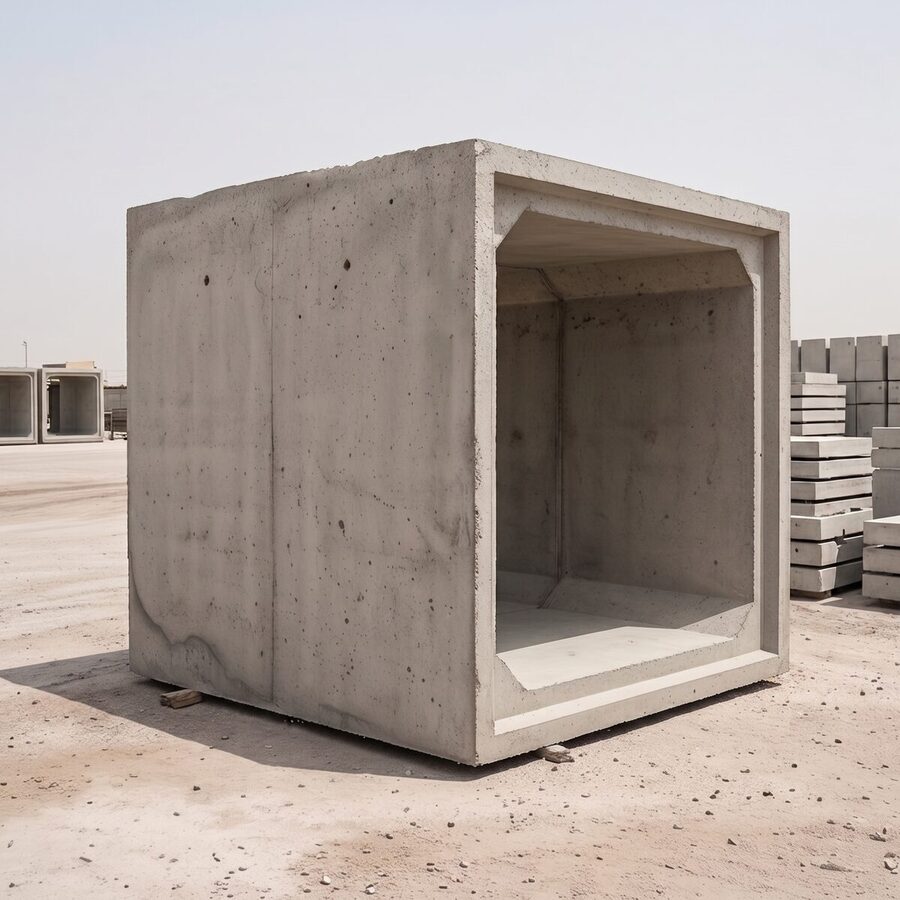
What the ground does to concrete here
Two things attack buried concrete in this region and they arrive together. Sulphates in soil and groundwater react with the cement paste and expand it, which cracks the concrete from inside. Chlorides pass through the concrete without damaging it and corrode the reinforcement instead, which cracks it from the steel outward.
A high water table makes both worse, because the mechanism needs water to move ions and there is no dry season underground. This is why a mix that has served fine on an inland job can fail on a coastal one at the same grade.
The three numbers in the soil report
You do not need to read the whole geotechnical report. Find the water-soluble sulphate content of the soil and the sulphate in the groundwater, both usually as SO₄; the chloride content; and the pH. Those decide the mix. Everything else in the report is somebody else’s problem.
Bandings follow the usual BS 8500 pattern and are a starting point for the conversation. Your consultant’s report and the project specification govern — if the two disagree, the specification wins.
Cement, coating, or both
Sulphate-resisting cement resists the sulphate mechanism but does little for chlorides. A surface coating slows both, but only while it is intact — and it gets damaged during offloading and backfill far more often than anyone allows for. So the two are not alternatives at the top of the range; they are layers, and the coating is the one you cannot inspect once the unit is buried.
Where chlorides dominate and sulphates are moderate, a dense mix with a low water-cement ratio and generous cover does more good than switching cement type. Permeability is the actual defence: a mix that water struggles to move through resists every ion-driven mechanism at once.
Cover is the cheapest thing you can buy
Nominal cover to reinforcement is the single most cost-effective durability decision on a buried unit. Going from 40 mm to 50 mm costs a little concrete and no extra process, and it buys years against chloride-driven corrosion. Specifying an exotic cement while leaving cover at the minimum is the wrong way round.
The corollary is that cover has to be achieved, not just drawn. Ask what spacers the plant uses and whether cover is checked before the pour, because cover written on a drawing and cover in the finished unit are different quantities.
What to send us
The sulphate and chloride figures from the soil report, the depth the units sit at, and whether the water table reaches them. That is enough for us to tell you the grade, the cement type and whether a coating is worth its cost on your job.
The estimator quoting your job also delivers it
Send the drawing or a photograph. You get a delivered rate, a date and a straight answer on whether the spec is right.
Do I need sulphate-resisting cement in the UAE?
It depends on the sulphate content in the soil and groundwater at your specific site. Moderate levels are usually handled with SRC or a GGBS blend; low levels do not need it. Get the figures from the soil report rather than assuming, because it varies sharply across short distances.
Does a coating replace the right cement?
No. A coating slows sulphate and chloride ingress while it is intact, but it is easily damaged during offloading and backfill and cannot be inspected once buried. At high exposure treat coating and cement type as layers, not alternatives.
What grade do you cast buried units in?
Typically C35/45 to C40/50 depending on exposure, with cover from 40 mm to 50 mm. The mix is set against the sulphate and chloride figures for your site.